- ScholarSphere Newsletter
- Posts
- ScholarSphere Newsletter #5

Welcome to 5th edition of ScholarSphere
Hey there, awesome readers! Welcome to our AI Newsletter - your top spot for navigating the fascinating world of AI in academia. If you haven't already, why not join our community? Just hit that button and sign up with your email to stay in the loop on all things AI in academics!
In today's search of AI, we'll see...
Deep Dive into AI: Expand Your Knowledge
The Impact of AI on Education, Work, and Jobs
Special Keynote by Gerd Leonhard
In this powerful, 180-degree-LED-walls-location, cinemax-like keynote, I address the impact of #artificialintelligence on #education, work and jobs. #futureofwork . Filmed in Warsaw at the Futurist of the year event, on April 11, 2024, the session provides a riveting analysis of how AI is shaping knowledge work, education and other sectors and what it all means for education institutions.
00:00 Introduction to Futurism
01:08 The Power of ChatGPT and the Future of Knowledge Work 03:16 Three Revolutions Shaping Our World
07:13 Exploring the Depths of Artificial Intelligence
15:23 The Impact of AI on Society and Trust
28:03 Navigating the Future: Humans vs. Machines
31:03 Redefining Education in the AI Era
31:36 Bolstering Human Intelligence and Creativity
35:00 The Evolution of AI: From Assistance to Autonomy (IA / AGI)
41:28 The Future of Work: Automation, Jobs, and Education
48:16 The Ethical Dilemmas of Advanced AI
56:21 Envisioning a Future with Balanced Human and Technological Growth
Mastering AI: Prompt Perfection #4
Training #4: Effective Paraphrasing with AI
Mastering the art of paraphrasing is crucial in academia to present information in a new light while respecting original ideas. Proper paraphrasing not only avoids plagiarism but also enhances clarity and audience engagement by reinterpreting the source material.
🎯Objective: Master the art of paraphrasing academic content with AI tools to ensure the end result is original, accurate, and tailored to various scholarly communications.
Note of Warning on Plagiarism: When paraphrasing content that includes concepts or writings from other sources, it's essential to adhere to academic integrity standards. This involves appropriately citing the original source, ensuring that the paraphrased text differs significantly in structure and wording while preserving the original intent, and being transparent about how the source material influenced your work.
👶 Rookie Prompt: "Paraphrase this."
❌ Why This Falls Short: This request lacks specificity and fails to guide the AI in ensuring the paraphrased content meets academic standards. It risks producing text that is too similar to the original, potentially leading to plagiarism. It also does not specify the intended use or the audience, which are critical for tailoring the paraphrasing appropriately.
🧙 ScholarScript: "Rewrite the following passage to be appropriate for [choose: a conference proceeding, a book chapter, an academic journal] in [your field, e.g., environmental science]. Focus on maintaining key concepts such as 'sustainable development' and 'renewable energy.' Ensure the new text is concise, about 200 words, and emphasize the importance of interdisciplinary research. Keep these keywords [list them], and avoid using these words [list them]. Include a reference to the original source at the end of the paraphrased passage."
✅ Why It Works Wonders: This tailored prompt ensures that the paraphrasing task is executed with precision, aligning with the specific requirements of the chosen academic setting. Specifying elements such as the tone, keywords, and context directs the AI to produce a passage that maintains the essence of the original content but in a new form that fits the intended publication or presentation venue. By mandating the inclusion of a reference to the original source, it reinforces the importance of crediting original ideas, upholding the principles of academic integrity.
Cutting-Edge AI Insights for Academia

World Economic Forum: EDUCATION AND SKILLS: From virtual tutors to accessible textbooks: 5 ways AI is transforming education
Singapore introduces AI in classrooms, caters to individual need
Effective strategies for designing AI-based educational games that can enhance mathematics education
AI for Research Papers: Will It Transform Higher Education?
Article of the Week: Using interpretable machine learning approaches to predict and provide explanations for student completion of remedial mathematics
Spotlight on AI Tools for Academic Excellence

ChatPDF: Your PDF AI - like ChatGPT but for PDFs, Summarize and answer questions for free.
Evidencehunt: Find medical evidence fast, reliably, an AI-powered research platform that streamlines the process of gathering, analyzing and utilizing medical evidence.
FormulasHQ : Easily Generate Spreadsheet Formulas with AI, making you the master of Excel, Google Sheets, and even custom coding with ease.
Jasper: AI copilot for enterprise marketing teams, Enterprise-grade AI tools to help marketing teams achieve both speed and performance
Unriddle: Read research papers faster, Quickly find info in documents, simplify complex topics, take notes and write with the power of AI. Save 4 hours on your next paper.
Academic Frontiers: Exploring AI Innovations
Learn by Doing: Build 50 Gen AI Projects from Scratch
By GenAILearniverse
What You'll Learn:
Understanding AI Models: Dive into how AI models can extract key information from videos to create concise summaries.
Using Hugging Face & Gradio: Learn to utilize Hugging Face for selecting the right AI model and Gradio for building a user-friendly interface.
Step-by-Step Coding: Follow along as we code together. No prior experience needed—just a willingness to learn!
Deployment: See how easy it is to deploy your application so others can test it out in real-time.
Who Should Watch?
This video is perfect for anyone interested in learning how AI can be applied to real-world tasks, enthusiasts wanting to get hands-on experience, and professionals looking to enhance their technical skills.
Main Issues in AI Ethics in a Glimpse
The use of artificial intelligence (AI) is rapidly growing in various industries, with the global market value projected to reach $267 billion by 2027. However, along with the benefits, several ethical issues arise with the implementation of AI technology. Here are the top 12 AI ethics issues:
1. Privacy and Surveillance For example, facial recognition technology, although useful for security purposes, raises concerns about invasion of privacy and mistaken identity.
2. Lack of Transparency Systems often lack transparency in terms of data collection, usage, and storage. This poses challenges in ensuring accountability and responsible use of AI.
3. Bias and Discrimination For instance, facial recognition technology and AI screening tools have faced criticism for racial discrimination, highlighting the need for unbiased algorithms.
4. Role of Human Judgment Incorporating human judgment into AI decision-making processes is a complex issue. The morality of machines is a subject of debate and requires careful consideration.
5. Unemployment Automation, a major aspect of AI, may lead to job losses. While new job opportunities may be created, the impact on employment is still a concern.
6. Human Behavior and Interaction AI's influence on human behavior and relationships, especially as technology becomes more advanced and integrated into our daily lives, is an area that needs attention.
7. Errors in Artificial Intelligence AI systems are not infallible and can lead to errors, including cases of mistaken identity or incorrect assumptions based on programmed methodology.
8. Legal Responsibility Determining legal responsibility in AI-related issues, such as accidents involving self-driving cars, is a complex and evolving area of law.
9. Environmental Concerns The carbon footprint of AI, coupled with the increasing energy demands associated with processing data, raises environmental concerns that need to be addressed.
10. Technology Reliance Over-dependence on certain aspects of technology, even if it saves time and money, raises questions about the potential consequences if there are problems or malfunctions.
11. Lack of Human Interaction and Emotion The importance of human interaction and emotional connection in customer service and other areas where AI is used should not be overlooked.
12. Misuse of AI Like any technology, AI can be misused for malicious purposes, such as hacking and creating manipulated content. Proper safeguards are necessary to prevent these abuses.
Conclusion While AI brings numerous benefits, it is essential to address these ethical issues to ensure the responsible and ethical use of this technology. This requires collaboration and cooperation among governments, industry experts, and organizations. Resources and frameworks are available to guide the development and implementation of ethical AI practices. As the field of AI continues to advance, it is crucial to prioritize ethics to build a sustainable and inclusive future.
For the main article click
Engage and Learn: AI Workshops & Seminars
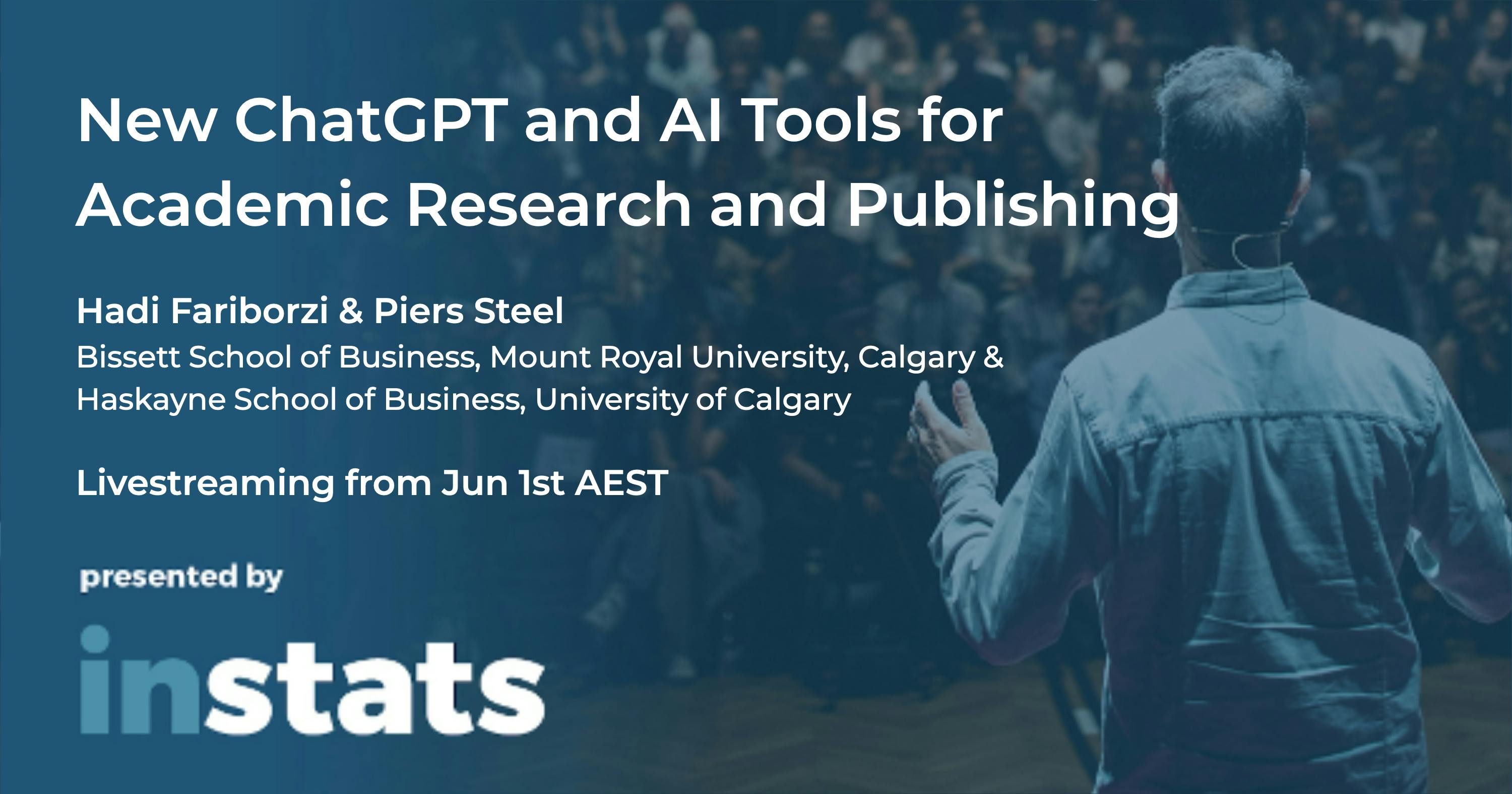
🎓 Featured Seminar: New ChatGPT and AI Tools for Academic Research and Publishing
Join professors Piers Steel and Hadi Fariborzi for a new seminar that covers recent developments in generative AI for academic research and publishing. This half-day seminar offers both newcomers and experienced AI users an unparalleled opportunity to quickly up-skill and re-skill by incorporating the latest AI advancements into the academic research and publishing process. Register for this seminar to stay at the forefront of academic innovation, effortlessly integrating the newest AI tools and techniques as digital research assistants for your scholarly work.
📅 Date: Live Session Begins May 31, 2024
⏰ Time: Live streaming 1-Day Seminar
Day 1: May 31st from 7:30 pm to 11:30 pm*
*All times are in your local time zone.
📍 Location/Online Platform: The live-stream sessions are done on Zoom
Secure your spot now and mark your calendar for an enlightening experience you won't want to miss!
Learn your way with @10xmeacademy! We’re on a mission to teach people how to leverage technology to 10x their potential. We believe that anyone can amplify their potential with the right skills and the right tools 🚀
We’re building a learning hub for YOU. Find out more 🔽
— 10XME Academy (@10xmeacademy)
9:38 AM • May 11, 2024
Are you looking to take your next steps in emerging tech? We’ve got the bootcamps for you!
Scroll down to find your next opportunity 🧵
— Encode Club (@encodeclub)
4:48 PM • May 10, 2024
And that's a wrap for this edition of our AI Newsletter! We've covered a lot of ground, but remember, the adventure doesn't stop here. Keep exploring, keep learning, and keep pushing the boundaries of what's possible with AI. Together, we're shaping the future of academia one breakthrough at a time. Until next time, stay curious and keep shining bright! ✨. If you want to contact editorial team for having your news, tool, website, X page, or even yourself! introduced in our newsletter you can find contact info just below.
Reply