- ScholarSphere Newsletter
- Posts
- ScholarSphere Newsletter #6

Welcome to 6th edition of ScholarSphere
Well, well, well, folks! What a whirlwind week it's been! With a flurry of announcements shaking things up, it feels like the course of history has taken yet another unexpected turn, all thanks to the lightning-fast pace of AI tool development! Welcome aboard our AI Newsletter—the go-to destination for navigating the ever-evolving landscape of AI in academia. If you haven't hopped on the bandwagon yet, now's the time! Hit that button, sign up with your email, and buckle up for a wild ride through all things AI in academics!
In today's search of AI, we'll see...
Deep Dive into AI: Expand Your Knowledge
🔮 No Longer Fiction: One Big Part of Westworld is Being Realized 🔮
By Prof. Piers Steel
Discover how advancements in AI and automated selection, reminiscent of the fictional company Incite from HBO's Westworld, are revolutionizing workforce management. With the development of synthetic validity methodologies and machine learning algorithms, companies can now predict and allocate job roles with unprecedented precision. While this promises to enhance productivity and job satisfaction by aligning individuals with suitable positions, it also raises concerns about income inequality, job security, and privacy. As we navigate this transformative landscape, it's imperative to establish robust policies and ethical guidelines to ensure equitable distribution of benefits and protect individual rights in an increasingly automated world.
You can find the full article in our LinkedIn Page.

Exploring GPT-4o: Significant Leap or Overhyped Update?

The latest updates for ChatGPT with the new GPT-4o and its exciting voice assistant have made quite a splash. We academics prefer to explore things deeply before reflecting on their impact. Here's our initial take on what has changed and what this means for us in academia.
Key Changes:
- Free Access: GPT-4o is now available for free to everyone, democratizing access to advanced AI and enhancing learning and research opportunities.
- Multi-Modality Integration: Handles text, images, and audio, enabling richer, context-aware interactions.
- Enhanced Contextual Understanding: Improved neural architecture for more complex instructions and nuanced content generation.
- Performance and Efficiency: Faster, 50% cheaper in the API, with better support for non-English languages.
- Real-Time Interaction: Responds to audio inputs in as little as 2 seconds, bringing us closer to a real-time assistant.
- Temporary Chats: Offers incognito-like temporary chats with no model training or history keeping after 30 days, ideal for analyzing sensitive content.
How Does This Affect Our Daily Work?
WOW Moment #1: Free Accessibility and Crazy Speed Expect a surge in app development, with everyone able to build custom tools, revolutionizing workflows and accelerating research.
WOW Moment #2: The Assistant Feature – Coming Soon A game-changing feature currently demoed for Mac, allowing real-time editing, coding assistance, and multilingual support.
Embracing the Future The free rollout of GPT-4o marks a pivotal moment in academia, fostering innovation and supporting equitable education and research. As we embrace this new era, we must also address ethical and practical challenges to ensure responsible use.
Read the full article here in our LinkedIn Page
Cutting-Edge AI Insights for Academia

Open AI announces GPT-4o, says Chat GPT can now reason across voice, text and video in real time: Know what it is
Is teaching becoming obsolete with GPT4o? Do we now have a UNIVERSAL TEACHER?
New GPT-4o Benchmarks
Filipino technology forums for mobile networks, the Internet, mobile phones, media, computers, games, news, and other discussions related to the Philippines.
Article of the Week: GPT-4 in Education: Evaluating Aptness, Reliability, and Loss of Coherence in Solving Calculus Problems and Grading Submissions by Alberto Gandolfi, New York University Abu Dhabi
Spotlight on AI Tools for Academic Excellence

Zenkit: The Project Management Solution for Organizations with Sensitive Data: The All-In-One Solution for Your Projects, Tasks, Team Chat, Appointments, Databases, Documents.
MirrorThink: MirrorThink harnesses AI to supercharge scientific research: It empowers researchers by answering their questions about methods, papers, and scientific concepts in minutes. This includes analyzing data, offering market insights, and even performing mathematical calculations.
Notegpt: An intelligent learning assistant for all types of learners: It allows you to obtain summaries and 20s overviews of any information you want from any website, including videos and articles. Through AI-powered summaries, notes, and other AI capabilities, it aims to save 60% of your time.
Thesify: Get instant qualified feedback on your essay, report, or manuscript: Our AI assistant Theo is trained on millions of academic texts from essays to full research papers. Theo tells you where your essay looks good and how to make it even better.
Yomu: Yomu AI is there to aid you in brainstorming and refining your paper: Whether you need to paraphrase, expand, shorten, or summarize, this tool is equipped to help
Academic Frontiers: Exploring AI Innovations
Generative AI in Post-Secondary Education
By The Institute for Management & Innovation (IMI)
Adam Vanzella Yang, Senior Research Associate at the Conference Board of Canada discusses generative AI in post-secondary education.
Generative AI has become a prominent force in post-secondary education and there are ongoing discussions about its potential benefits and drawbacks for teaching and learning. But how are students and educators responding to the ongoing AI revolution? This seminar presents findings from a nationally representative survey fielded in December 2023 and January 2024. The presentation examines frequency of use, perspectives, and experiences with generative AI among post-secondary students and educators, focusing on differences by gender, cultural background, age, field of study, and institution type.
Navigating the Ethical Maze of Artificial Moral Agents
Artificial Morality is a growing field within AI that aims to imbue AI systems with moral capabilities. It raises important ethical and conceptual challenges, as explored in Catrin Misselhorn's article.
Key questions include whether artificial systems can be moral agents and what moral standards they should follow.
🖋 Examples of the need for artificial moral agents include a Roomba vacuum cleaner deciding whether to avoid killing insects, eldercare robots balancing autonomy and health in decision-making, and autonomous vehicles facing moral dilemmas like the trolley problem.
📄 Moor's hierarchical classification of moral agents categorizes them as Ethical Impact Agents, Implicit Ethical Agents, Explicit Ethical Agents, and Full Ethical Agents. Achieving full moral agency in artificial systems remains challenging but important.
📐 Three approaches to implementing moral standards in AI are discussed: top-down principles, bottom-up learning, and hybrid approaches that adapt to specific contexts.
🪑 Ethical controversies surrounding artificial moral agents include the inevitability of morally problematic situations, the reduction of ethics to safety alone, the distinction between trust and reliance, the balance between preventing immoral use and human autonomy, and the significance of emotions in moral judgment.
💡 Misselhorn concludes with three guidelines for ethical development: careful consideration of moral values, ongoing ethical scrutiny, and alignment with human values and societal norms.
For More Detailed summary please visit our LinkedIn page
For the main article click here
Engage and Learn: AI Workshops & Seminars
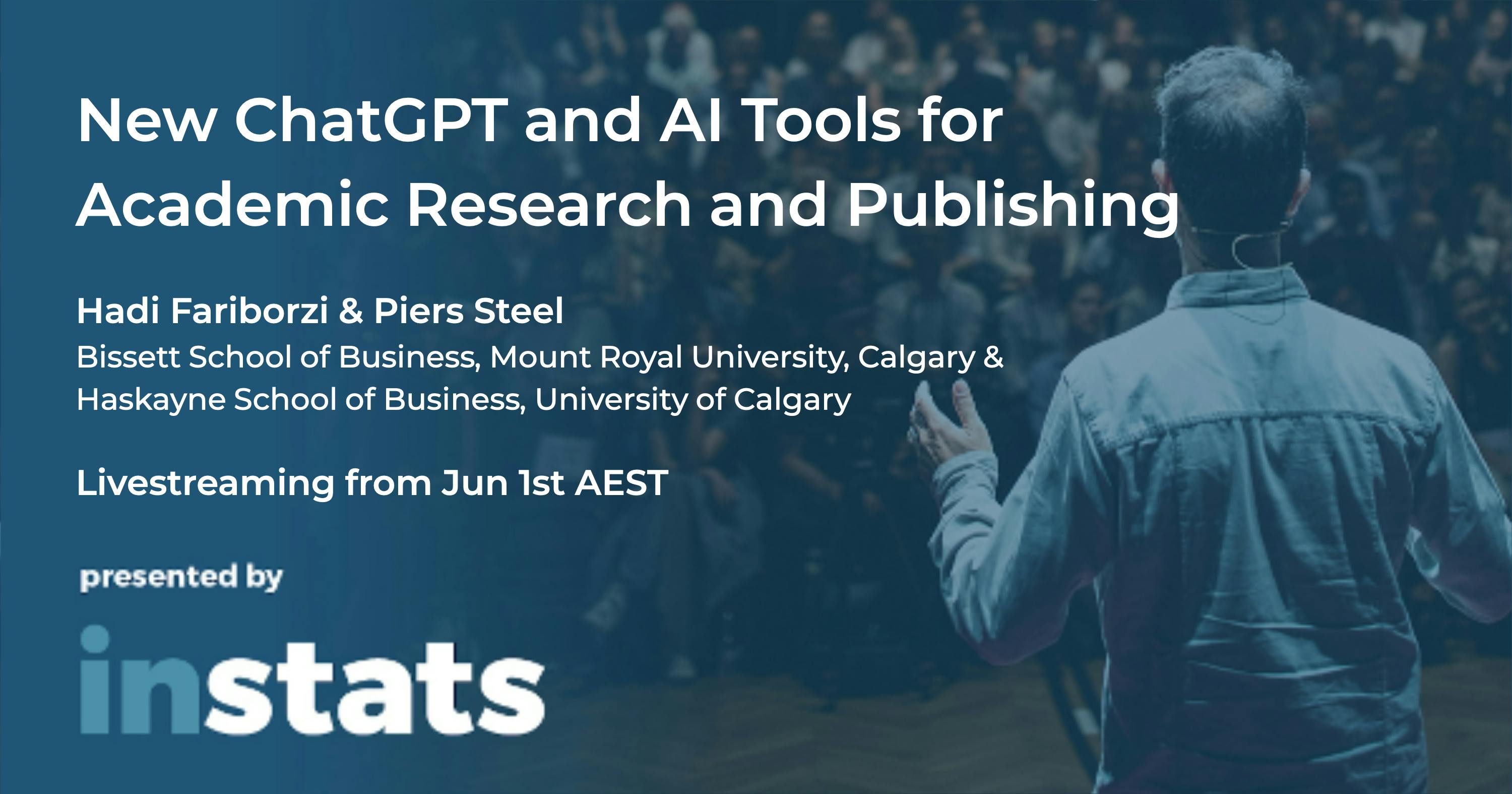
🎓 Featured Seminar: New ChatGPT and AI Tools for Academic Research and Publishing
Join professors Piers Steel and Hadi Fariborzi for a new seminar that covers recent developments in generative AI for academic research and publishing. This half-day seminar offers both newcomers and experienced AI users an unparalleled opportunity to quickly up-skill and re-skill by incorporating the latest AI advancements into the academic research and publishing process. Register for this seminar to stay at the forefront of academic innovation, effortlessly integrating the newest AI tools and techniques as digital research assistants for your scholarly work.
📅 Date: Live Session Begins May 31, 2024
⏰ Time: Live streaming 1-Day Seminar
Day 1: May 31st from 7:30 pm to 11:30 pm*
*All times are in your local time zone.
📍 Location/Online Platform: The live-stream sessions are done on Zoom
Secure your spot now and mark your calendar for an enlightening experience you won't want to miss!
Wild. GPT-4o on ChatGPT can generate full blown charts and statistical analysis from spreadsheets with a single prompt in less than 30 seconds.
This stuff use to take ages in Excel.
— Zain Kahn (@heykahn)
11:45 AM • May 14, 2024
@MerhdadS@imVinusankars@RezaeiKeivan@AounonK@AtoosaChegini@Wenxiao__Wang@FeiziSoheil finally, catch a sneak preview of my other upcoming FAccT work showing significant geographic disparities in LLM factual recall.
at 2 workshops:
- Talk in Global AI cultures (Schubert 6) ~11:30
- Poster in R2FM (Halle A3) 10:15-11:15 and 15:00-15:45.— Mazda Moayeri (@MLMazda)
7:08 AM • May 11, 2024
And that's a wrap for this edition of our AI Newsletter! We've covered a lot of ground, but remember, the adventure doesn't stop here. Keep exploring, keep learning, and keep pushing the boundaries of what's possible with AI. Together, we're shaping the future of academia one breakthrough at a time. Until next time, stay curious and keep shining bright! ✨. If you want to contact editorial team for having your news, tool, website, X page, or even yourself! introduced in our newsletter you can find contact info just below.
Reply